
Let Food Be Thy Medicine: Understanding the Healing Power of Nutrition
ARTICLE
Introduction: The Sacred Power of Food
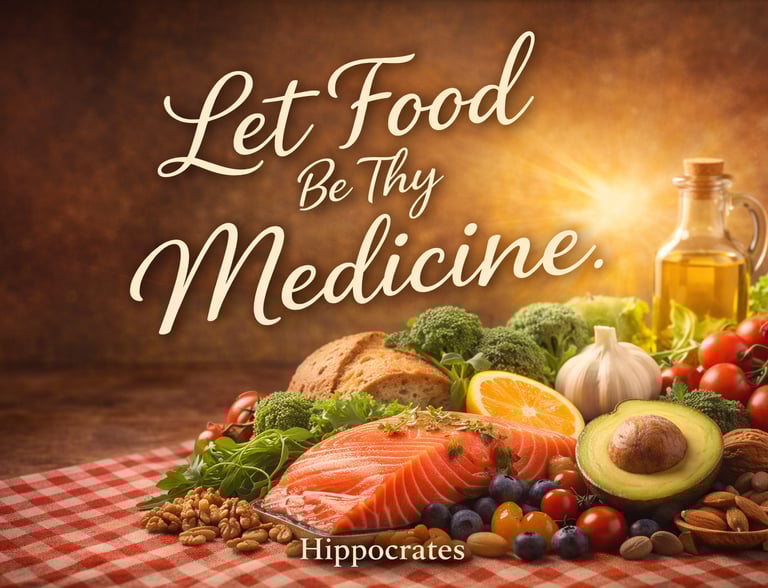
Long ago, Hippocrates offered a simple truth that still echoes through time: “Let food be thy medicine and medicine be thy food.” His words invite us to see eating as more than routine—it can be a ritual of care, a daily opportunity to come home to ourselves.
In a world overflowing with fast food and processed convenience, it’s easy to forget that nourishment is not only physical—it’s energetic, emotional, and spiritual too. Food can fuel the body, yes, but it can also support healing, restore balance, and help protect us from illness. When we choose with awareness, the plate becomes a pathway to wholeness.
The Impact of Nutrition on Health
Most of us know a balanced diet matters—but there’s something deeper here: the body is always listening, always responding, always turning what we eat into the building blocks of our lived experience. The vitamins and minerals in whole foods help strengthen the immune system; antioxidants support the body’s natural defenses; fiber and hydration encourage cleansing and renewal. In a very real sense, food becomes information—guidance the body uses to repair, regulate, and thrive.
For example, foods rich in omega-3 fatty acids—like fish and walnuts—can help calm inflammation and support the heart. Fruits and vegetables offer vibrant nourishment that can aid digestion, steady energy, and bring the body into greater harmony. Each intentional choice is like placing a gentle blessing into your day: a way of saying, I care for this life I’ve been given.
Food as a Preventative Blessing
There’s wisdom in the old saying: prevention is better than cure. When we nourish ourselves with whole foods—grains, legumes, lean proteins, healthy fats, herbs, and colorful produce—we create a foundation that helps the body stay resilient. Many studies link nutrient-dense eating patterns to lower risk of chronic illnesses like diabetes, heart disease, and certain cancers. But beyond statistics, there’s a simple spiritual principle at work: what we cultivate daily, we become over time.
Consider the Mediterranean diet, with its emphasis on plant-based foods, olive oil, fish, and simple, fresh ingredients. It’s often associated with heart health and longevity, but it also carries a quieter lesson—eat in a way that honors nature, seasonality, and balance. When food comes closer to the earth, it often brings us closer to ourselves.
Bringing It All Together
Hippocrates reminds us that health is not only something we seek when we’re unwell—it’s something we practice. What we place on our plate can be an ally, guiding us toward vitality, or it can quietly weigh us down.
So the next time you sit down to eat, pause for a breath. Notice the colors, the textures, the aroma. Ask gently: Will this support my body? Will this uplift my spirit? In that small moment of awareness, eating becomes an act of self-respect—maybe even a kind of prayer.
In the end, embracing “let food be thy medicine” isn’t just about choosing better meals. It’s about choosing presence. With every bite, you have the chance to nourish your body, steady your mind, and soften your spirit into greater well-being. Here’s to wholesome meals, vibrant health, and the quiet healing available to us—one mindful plate at a time.
A Bowl of Barley Soup
Resistance Versus Change
by Barb Casper
In the middle of a cardiac rehabilitation class, we gathered as seekers do—each of us initiated by a sudden rupture in the ordinary. A heart attack has a way of cracking life open, revealing what matters and what has been ignored. We were there to mend, yes, but also to listen for what the body had been trying to say long before it cried out.
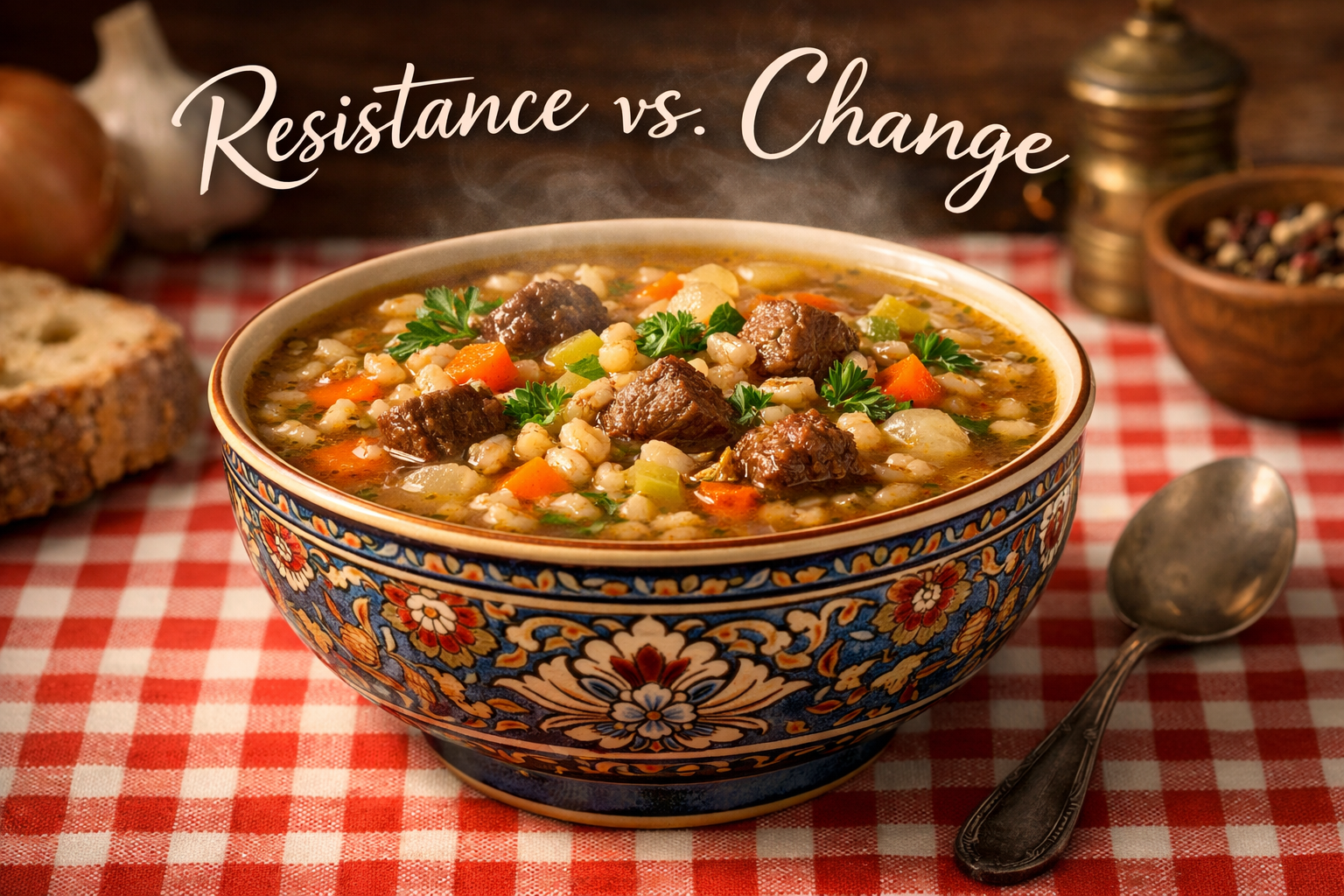
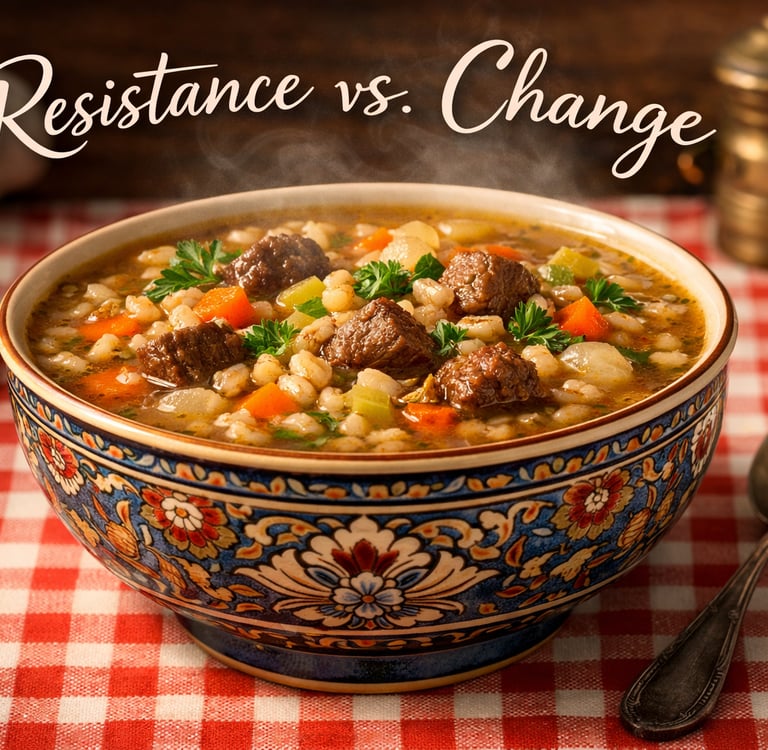
That day, the lesson was about nourishment. Before us sat a steaming bowl of homemade barley soup—humble, earthy, alive with intention. Fresh organic vegetables. Grass-fed beef. A simple offering, like something placed on an altar: warm, fragrant, and patiently made.
Across from me, a woman studied the bowl as though it were a strange omen. Then she leaned in and whispered, blunt as a spell: “I eat all my meals at a fast-food restaurant, and I’m not about to try this crap.”
Her words didn’t sound like ignorance so much as devotion—devotion to the familiar. It wasn’t that she didn’t understand the stakes. It was that her habits had become a sanctuary, and the unknown felt like exile. Fast food wasn’t just food to her; it was ritual, comfort, certainty. A map she trusted. The soup, though healing, was foreign—an invitation that threatened the identity she’d been carrying for years.
And in that moment, I saw something true about change: resistance is rarely about the new thing itself. It’s about what the new thing asks us to release.
The Familiar as a Spell
We like to think we are rational creatures, persuaded by evidence and outcomes. But most of us are governed by deeper forces—memory, fear, longing, and the ancient need to feel safe. The familiar can be a kind of enchantment: it wraps around us and whispers, Stay. Don’t risk it. Don’t transform.
Even when a path is harming us, it can still feel like home. That is the paradox. The ego clings not to what is good, but to what is known. And the body—faithful, wise, and patient—keeps sending messages, hoping we will finally hear them.
The World, the Body, and the Fog of Illusion
In today’s world, clarity is harder to come by. We live inside a haze of marketing and mimicry—where “healthy” is a costume worn by products that do not truly nourish. The land itself has been burdened: toxins in soil and water, chemicals in processing, synthetic additions meant to preserve shelf life while quietly stealing vitality.
It can feel like walking through a marketplace of illusions, where the bright packaging promises wellness, but the spirit of the food is thin or absent. And yet—even in a world like this—the body still responds to truth. It still recognizes what is real.
The Call of the Threshold
Yes, food is not the only thread in the tapestry of illness. But it is a powerful one. The rise in heart disease, obesity, diabetes, and chronic conditions echoes a collective forgetting—an abandonment of the natural rhythms that once guided human life. When we continually refuse change, we don’t simply maintain the status quo. We choose a slow drift away from vitality.
Not as punishment. Not as moral failure. Simply as cause and effect—energy moving where it’s been directed.
Remembering the Old Ways
Our ancestors lived closer to the source. Food was not an industry; it was a relationship. It came from the hands of the community and the breath of the earth. It was grown, gathered, prepared, and shared—often with gratitude, sometimes with reverence. They understood something we are relearning now: when food is alive, it strengthens life. When food is altered beyond recognition, the body must struggle to translate it.
To reclaim our health is, in many ways, to reclaim our remembering. To return to foods that still carry the sun. To support local and sustainable farming. To choose what is simple, clean, and close to the earth.
How Change Begins
For those who struggle with change—and most of us do—the way forward isn’t through shame or force. Transformation rarely arrives as a thunderclap. More often, it arrives as a soft opening:
One meal
One ingredient.
One decision.
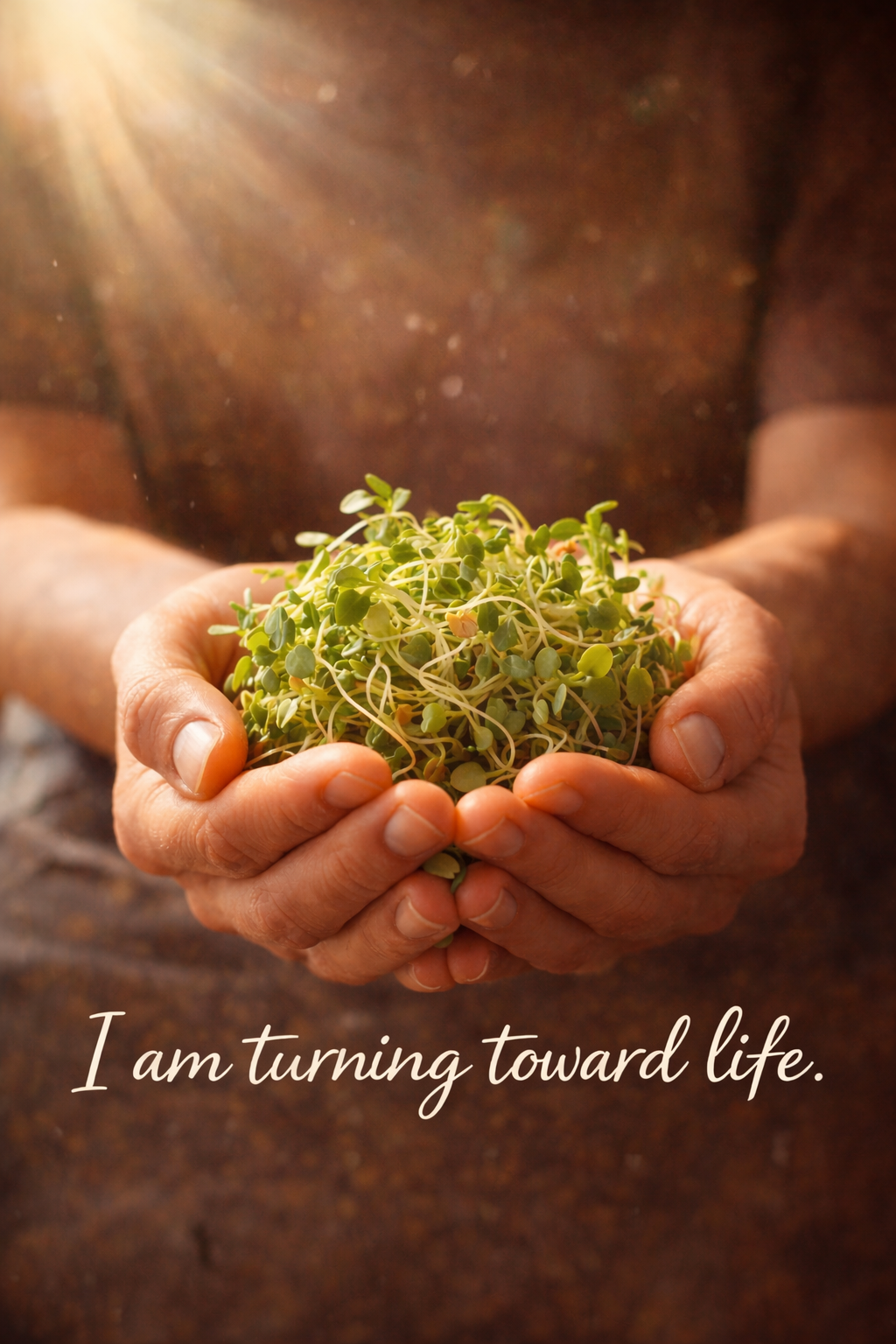
A single step is a signal to the universe within you: I am ready. I am listening. I am turning toward life.
Change is not just about what we eat. It is about who we become when we finally stop resisting the invitation to heal. And our lives depend on our willingness to cross that threshold.


MISSION STATEMENT
Our purpose is to provide ethical energy medicine that reconnects you with the flow of life and vibrant well-being.
We support your transformation journey through intuitive practices, sacred tools, and compassionate care. Rooted in the oneness of all existence, we honor the sacred dance of mind, body, and spirit.